
Starting January 1, 2026, KCC has a new electricity agreement from Engie Resources. As part of that agreement, Engie is selling us both wind power and wind-generated Renewable Energy Credits (RECs) from a wind farm near Priddy, Texas. The wind farm’s owner is Engie, a huge multinational power company with North American headquarters in Houston, TX.
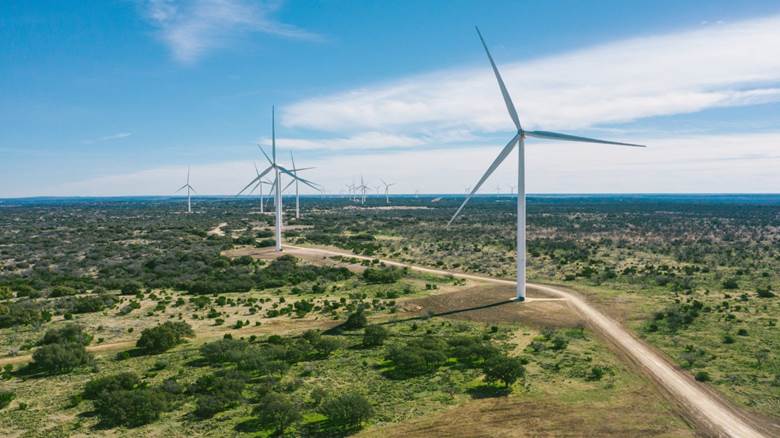
This arrangement either makes a lot of difference compared to the way we have been getting our electricity, or it makes almost no difference, depending on how you look at it. I’d argue the difference is subtle, but still very important. That’s what I want to show in this post.
What does it mean to buy electricity from a Texas wind farm? That’s a little complicated. It does not mean that electrons from the wind farm are streaming down some wire and ending up here. If you were able to follow the electrons to their point of use (which isn’t actually possible), you would find that the electrons from the Texas wind farm are being used in Texas.
Instead, we will continue to use electricity from our local grid. (Our grid is run by an organization called PJM, which I have frequently written about in the past.) We are paying Engie (the Texas wind farm’s owner) for the amount of electricity that we use from the local grid. Engie sells the wind-generated electricity into the Texas grid (their grid is called ERCOT, the Electric Reliability Council of Texas). There is no physical interconnect between ERCOT and PJM. KCC buys the RECs that are created by that generation. RECs document the renewable attributes of the generation source and will be retired in KCC’s name. They cannot be resold again.
It is reasonable to ask why purchasing our electricity in this roundabout way makes sense. After all, it will not make our electricity (which we will still get from the local PJM grid) any cleaner. It will not save us any money, either (it is expected to cost slightly more than we are currently paying). Why should we bother?
My answer is that, by buying electricity this way, we are doing our part to help solve the climate crisis. We buy about 13 million kWh of electricity each year. We are matching that consumption with the Priddy Wind generation. Providing this wind-generated electricity to the Texas grid makes that grid cleaner than it would be if only fossil-fuel generation were used instead. This reduces the burning of fossil fuels, which helps limit the CO2 in the planet’s atmosphere, at minimal cost to us.
It would be great if we could buy renewable electricity close to home, thereby reducing the fossil fuels used in our own (PJM) grid. That would make the electricity that we and our neighbors actually consume cleaner. But our area does not have the wind and solar resources that other areas have, so buying wind-generated electricity in Texas where it is windier is the best we can do for now.
Over the next few years, it is likely that renewable generation on the PJM grid will gradually increase, and that our own use of solar power on campus will grow. Those changes will mean that our impact on the climate will be much more direct. In the meantime, we can make a valuable—if indirect—contribution by buying wind power and RECs in Texas.
PS: Those of you who read my previous blog post (about the massive increases in our “capacity charge” from PJM) may be wondering whether our Texas wind contract affects those increases. It does not affect them at all. PJM charges us based on the electricity we draw from the PJM grid, and that will not change because of this contract.
 On the Kendal Journey